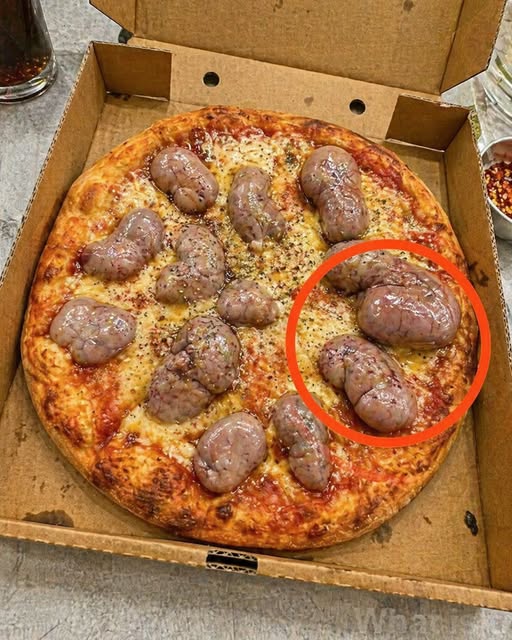
At first glance, something about the pizza didn’t feel right. The crust was uneven, with strange puffed areas and irregular bubbles across the surface. Instead of looking appetizing, it created hesitation. It wasn’t the picture-perfect pizza people usually expect, and that alone was enough to raise doubt.
It looked like something had gone wrong in the kitchen. A mistake. A failed bake. Something that might normally be set aside without a second thought.
Why We Judge Food Before Tasting It
It’s natural to judge food by appearance first. We’re used to polished, uniform visuals—especially with popular foods like pizza. So when something looks different, the brain quickly assumes something is wrong.
In this case, the uneven crust and swollen spots created uncertainty. It didn’t match the familiar idea of what pizza “should” look like, even though nothing was actually wrong with it.
What Was Really Happening in the Oven
The truth is far more interesting—and completely normal.
As pizza bakes, heat turns moisture inside the dough into steam. That steam needs to escape, and when it can’t, it forms bubbles that push the dough upward. Those irregular pockets are what create that uneven, airy surface.
Trapped air in the dough expands as well, especially under high heat. This combination leads to unpredictable shapes, bubbles, and textures.
Far from being a mistake, it’s actually a sign of real, freshly baked dough reacting naturally to heat.
Cheese, Heat, and Natural Reactions
Cheese plays its part too. As it melts, it can trap steam underneath, creating small pockets that lift or distort sections of the surface.
Every ingredient reacts differently in the oven. Dough expands, cheese melts, moisture evaporates—all at once. The result is never perfectly identical from one pizza to another.
Why Every Pizza Looks a Little Different
Even when using the same recipe, no two pizzas come out exactly alike. Small differences in dough handling, stretching, thickness, and oven heat all affect the final look.
Thicker dough tends to trap more air, creating bigger bubbles. Thinner dough cooks more evenly. Slight changes in timing or temperature also shape the final texture.
That unpredictability is part of what makes handmade pizza feel authentic.
Looks Don’t Always Tell the Full Story
It’s easy to mistake visual irregularities for poor quality. But appearance alone doesn’t define taste or safety.
In this case, nothing was burned or undercooked. The texture was still right, and the ingredients were perfectly fine. The only thing unusual was the surface.
The Moment Everything Changes
The first bite often clears up the confusion.
Despite its unusual appearance, the pizza delivers exactly what it should—balanced flavor, soft melted cheese, and a satisfying crust. What looked “wrong” turns out to be completely normal once experienced fully.
A Simple Shift in Perspective
This kind of moment highlights how quickly assumptions form based on appearance alone. Something unfamiliar can easily be misjudged before it’s understood.
But once the process behind it becomes clear, the reaction shifts—from doubt to understanding.
The Science Behind Everyday Food
Heat, air, and moisture are constantly interacting during cooking. What looks like a flaw is often just physics at work.
Understanding that removes the confusion and adds appreciation for how food actually comes together in real time.
Final Thoughts
The pizza that seemed imperfect at first was never a mistake. It was simply the result of natural baking processes doing exactly what they’re supposed to do.
Not everything that looks unusual is wrong—sometimes it’s just real, unfiltered, and authentic.
Next time something doesn’t look the way you expect, take a closer look before judging it—you might be surprised by what you discover.