You’ve probably noticed it before.
Maybe while washing your hands, exercising at the gym, or sitting outside on a hot afternoon, you suddenly spot blue or green veins standing out more clearly beneath your skin.
For some people, it’s barely noticeable.
For others, it can feel alarming.
The immediate question is usually the same:
Is this normal… or is something wrong?
The truth is, visible veins are often completely harmless. But in certain situations, they can also signal underlying circulation problems worth paying attention to.
Understanding the difference matters.
Why Veins Become More Noticeable
Veins play a critical role in the circulatory system by carrying blood back toward the heart.
Unlike arteries, which sit deeper beneath muscle and handle high-pressure blood flow, veins are closer to the skin’s surface and have thinner walls. Because of this, changes inside the body can make them appear more prominent.
In many cases, visible veins are actually a normal response to everyday factors.
Low Body Fat Makes Veins Easier to See
One of the most common reasons veins appear more noticeable is low body fat.
A layer of fat naturally sits between the skin and underlying blood vessels. When that layer becomes thinner—whether through exercise, genetics, or a lean physique—veins become easier to see.
This is why athletes and bodybuilders often have highly visible veins, commonly referred to as “vascularity.”
For many healthy individuals, this is simply a physical characteristic rather than a medical issue.
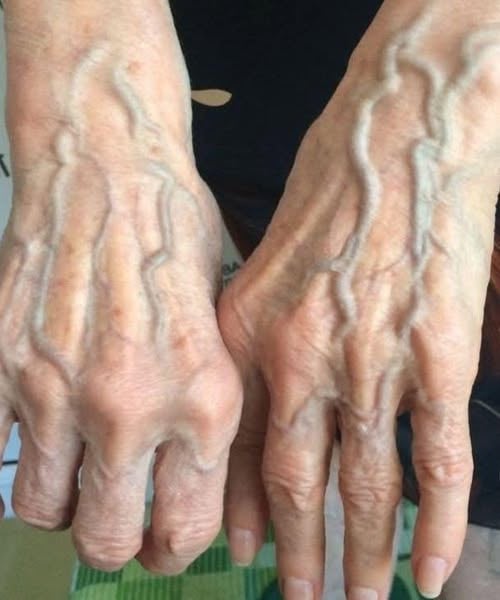
Aging Naturally Changes Skin and Veins
As people age, the skin gradually loses collagen and elasticity.
At the same time, the protective fat layer beneath the skin becomes thinner.
This combination makes veins appear more pronounced over time, especially on the hands, arms, and legs.
In most cases, these changes are considered a normal part of aging rather than a health concern.
Heat and Exercise Can Temporarily Expand Veins
Ever notice your veins “pop” more after working out or spending time in hot weather?
That happens because the body increases blood flow during exercise and heat exposure.
Your veins temporarily widen to help regulate temperature and move blood more efficiently.
Once the body cools down or relaxes, veins often return to their usual appearance.
Hormonal Changes Can Also Play a Role
Hormonal fluctuations during pregnancy, menstruation, or menopause can influence circulation and blood pressure.
This may cause veins to appear more visible for periods of time.
Again, this is often temporary and not automatically a sign of illness.
When Visible Veins Could Signal a Problem
While visible veins are usually harmless, certain symptoms should not be ignored.
Bulging, twisted, painful, or swollen veins may indicate circulation issues such as Chronic Venous Insufficiency (CVI), a condition where blood struggles to flow properly back toward the heart.
This can lead to:
- Aching or heavy legs
- Swelling in the ankles
- Skin discoloration
- Itching or discomfort
- Enlarged varicose veins
Varicose veins are common, especially in the legs, and can become more uncomfortable over time if left untreated.
Warning Signs That Require Medical Attention
Some vein-related symptoms may indicate more serious conditions.
One important example is Deep Vein Thrombosis (DVT), which involves a blood clot forming deep inside a vein.
Symptoms may include:
- Sudden swelling in one leg or arm
- Warmth or redness
- Severe pain or cramping
- Skin discoloration
Because blood clots can become dangerous if they travel to the lungs, these symptoms should be evaluated by a medical professional immediately.
Simple Habits That Support Vein Health
Fortunately, several everyday habits can help support healthy circulation:
- Staying hydrated
- Walking regularly
- Avoiding sitting or standing for long periods
- Elevating legs when resting
- Maintaining regular movement throughout the day
- Using compression socks when recommended
Even small lifestyle changes can help improve blood flow and reduce pressure on veins.
Your Veins Can Reveal More Than You Think
Visible veins are often nothing more than a normal part of body composition, aging, exercise, or temperature changes.
But your body also uses them to send signals.
Paying attention to sudden swelling, pain, warmth, or unusual texture changes can help identify issues early and support long-term health.
Sometimes veins are simply cosmetic.
Other times, they deserve closer attention.
The key is understanding the difference.