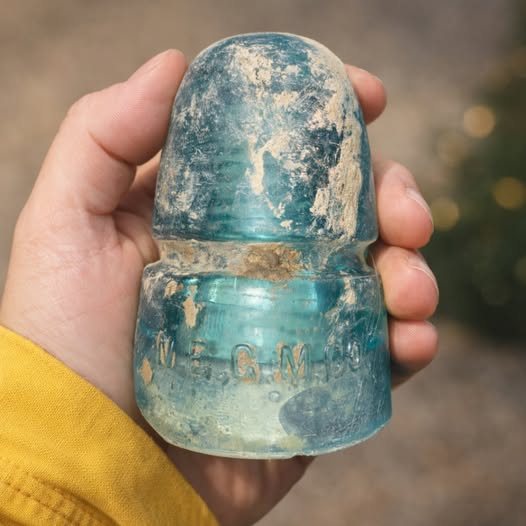

Have you ever looked up at a telephone pole and noticed those glass or porcelain objects perched along the crossarms? They may look like old-fashioned decorations, but they were once essential to keeping both electricity and communication signals stable, safe, and reliable.
What Are Insulators?
Insulators are specialized components designed to hold wires in place while preventing electricity from traveling into the pole or the ground.
Their purpose is straightforward but critical:
- They physically separate the wire from the pole structure
- They prevent electrical leakage that would weaken power transmission or communication signals
- They reduce the risk of dangerous contact with the pole, hardware, or nearby surfaces
Without this separation, energy (or signal strength) could dissipate—meaning power delivery becomes inefficient and telephone/telegraph communication becomes unreliable.

Why They Were So Important for Communication
In early telephony and telegraph systems, signal quality mattered. If the line “leaked” energy due to poor insulation, the result could be:
- Weaker signals over distance
- More noise and interference
- Dropped or unclear long-distance connections
In simple terms: without insulators, long-distance calling would have been far more difficult and frustrating.
Materials: More Than Just Glass and Porcelain
Historically, insulators were mainly made from:
- Glass (often translucent or brightly colored)
- Porcelain (durable, weather-resistant, and strong)
Over time, manufacturers experimented with other materials. Depending on local availability and engineering needs, some insulators were made using unusual materials beyond the classic glass/porcelain categories.
What didn’t change: the core requirement that the material must be highly resistant to conducting electricity and able to survive years of outdoor exposure.
Different Sizes for Different Lines
Not all wires carry the same kind of “load,” so insulators vary widely in shape and size. The key rule is:
- Higher voltage requires larger, more protective insulators
This is because of a serious electrical risk called flashover—when electricity jumps through the air from the wire to another surface.
To lower that risk, high-voltage lines often use insulators with:
- Large umbrella-like disks
- Wide lower skirts
- Extra distance between wire and pole hardware
These designs help keep the electrical pathway long and indirect, making it harder for electricity to “jump.”
Why Some Insulators Look Like Little Umbrellas
That “umbrella” shape isn’t just visual—it’s functional. It helps:
- Increase the surface distance electricity would have to travel
- Shed rainwater, reducing conductive moisture paths
- Resist contamination from dust and grime that can create leakage routes
In harsh weather, these design details can be the difference between stable service and repeated failures.

The Surprising World of Insulator Collecting
Insulators aren’t just old hardware. There is a real collector culture around them—especially glass pieces prized for color, clarity, and rarity.
This hobby expanded significantly when:
- Utility companies began burying wires in many areas
- Large numbers of older insulators were removed, left behind, or discarded
- People started recognizing them as historical objects and decorative collectibles
Collectors generally fall into two broad groups:
- Those who love decorating with colorful vintage glass
- Those who hunt for specific models, marks, shapes, and production runs
How Old Are Most Collectible Insulators?
Many insulators in collections are typically:
- About 70 to 145 years old
- With some styles commonly appearing from the late 1800s into the early 1900s
As with many antiques, age alone isn’t everything, but older pieces that are no longer produced often become more desirable—especially if they are uncommon in color or design.
What Are They Worth?
Insulator prices range widely:
- Some are very inexpensive and easy to find
- Others are extremely valuable if rare, unusual, or highly sought after
You might find:
- Low-cost pieces at flea markets
- Occasional bargains for under a dollar
- Rare examples that can sell for very high prices in collector circles
What to Remember Next Time You See One
When you spot a glass or porcelain insulator on a pole, you’re looking at a piece of engineering that helped build modern life. These objects:
- Protected lines from leakage and failure
- Supported long-distance communication in the telephone and telegraph era
- Enabled safer, more reliable power transmission as electrical grids expanded
They may look outdated today, but their role was foundational—quietly supporting the ability to stay connected, from early calls to the digital world we rely on now.