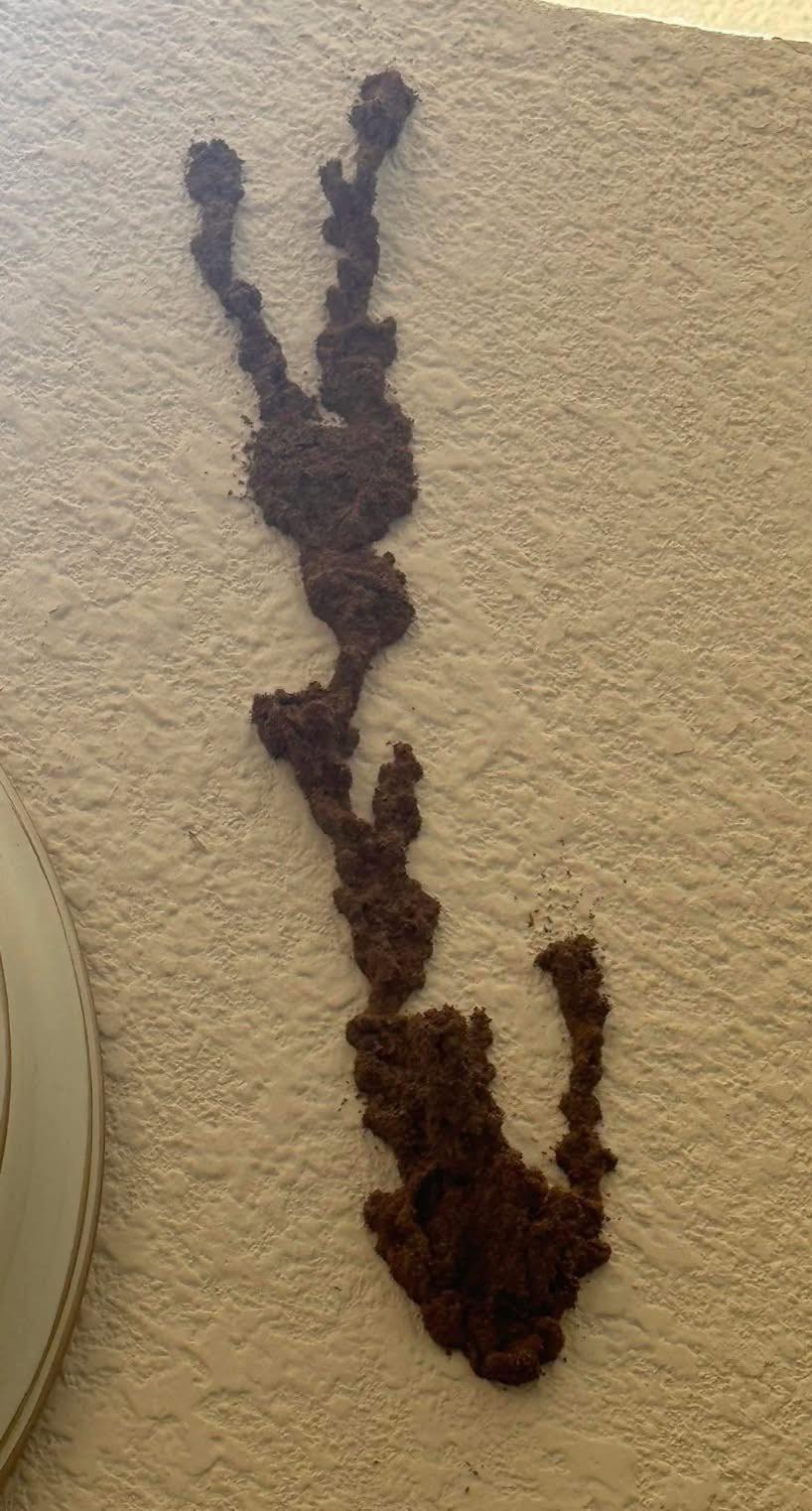

Termites are often described as “silent destroyers,” and for good reason. These tiny insects can cause extensive, costly damage to a home without the homeowner even knowing they’re there. A recent post on Reddit highlighted an unsettling experience when a small dirt tunnel appeared on the wall inside someone’s home—right above a clock. What started as a seemingly harmless patch of soil grew into a thick, alarming trail within 18 days. Upon further inspection, the answer became clear: termite mud tubes.
If you’ve ever spotted something similar or are wondering about the implications of such an encounter, it’s crucial to understand what this means for your home. Termites are insidious creatures that can cause thousands of dollars in damage, often without you realizing the extent of their work until it’s too late. Here’s why this particular discovery matters and what you should do if you find termite mud tubes in your walls.
The Hidden Danger: What Are Termite Mud Tubes?
Termite mud tubes are narrow, pencil-width tunnels that termites create to travel safely between their underground colonies and the wooden structures of your home. Made of soil, wood particles, and termite saliva, these mud tubes act as protective highways, shielding the termites from open air, which they cannot survive in for long.
While these tubes are most commonly found on the foundation walls or inside crawl spaces, they can appear anywhere in your home where there is wood—such as along the interior walls, as in the Reddit post that caught people’s attention. This sight is a major red flag, signaling that termites are already infesting your home.
Why Mud Tubes Matter
Termite mud tubes are often the first visible sign of a serious infestation. Although termites work quietly and out of sight, when these mud tubes make an appearance, it’s an indication that the termites are already deep inside the structure of your home. At this point, the damage has likely begun, and the colony could be large enough to cause significant harm.
You might not realize it, but termites are persistent and often wreak havoc for months or even years before their presence becomes obvious. By the time you spot a mud tube, structural damage could already be underway. It’s essential to understand that termites are not just a nuisance—they are a threat to the integrity of your home.
The Real Risk: Why Termites Are a Serious Problem
Termites are among the most destructive pests, and their ability to cause damage goes far beyond what many homeowners expect. According to the National Pest Management Association (NPMA), termites cause more than $5 billion in damage to homes annually in the United States alone. What’s worse, this damage is typically not covered by homeowners insurance, leaving you with the full financial burden of repairs.
1. The Cost of Structural Damage
Termites feed on cellulose, which is found in wood, and over time, their feeding can severely weaken the structural components of a house, such as beams, flooring, and support columns. In some cases, the damage can compromise the entire foundation of the building, leading to costly repairs that could run into the tens of thousands of dollars.
2. A Large, Hidden Colony
Subterranean termites, the most destructive species, are known to form massive colonies, sometimes numbering in the tens of thousands of individuals. Because these colonies work in the shadows—eating away at wood and structures out of sight—they can cause extensive damage before you even notice their presence. By the time mud tubes appear, a significant infestation may already be well-established within your home.
3. The Time Factor: The Longer You Wait, the Worse It Gets
The nature of termite infestations is such that they don’t cause immediate, obvious damage. Unlike other pests like ants or cockroaches, termites don’t scatter or become immediately visible once inside your home. Instead, they work quietly and methodically, making it easy to ignore or underestimate the problem. Delaying treatment can lead to more extensive damage, and the longer you wait, the more expensive it becomes to fix.
What To Do if You Spot Termite Mud Tubes in Your Home
If you notice mud tubes appearing on your walls, take immediate action. The following steps will help you address the problem before it spirals out of control:
1. Do Not Disturb the Tubes
While it may be tempting to scrape the mud tubes off the wall, resist the urge. Damaging the tubes can scatter termites into other areas of your home or push them deeper into the structure, making them harder to track. Additionally, pest control professionals can use the intact tubes to assess the infestation’s extent, so it’s crucial to leave them undisturbed.
2. Get a Professional Inspection
Once you’ve identified a mud tube, it’s time to call in the experts. A professional pest control specialist can accurately identify whether the infestation is caused by termites or another pest, such as ants. They will assess the damage, evaluate the size of the colony, and determine the best course of action for treatment.
3. Schedule Immediate Treatment
Termite treatments can vary based on the severity of the infestation. Some of the most common methods of termite control include:
- Bait Systems: These involve placing termite bait stations around your home. The termites feed on the bait and carry it back to the colony, eventually eliminating the entire group.
- Liquid Treatments: Pest control experts can apply liquid termiticides to the soil around your home, creating a barrier that termites cannot cross.
- Foam or Dust Treatments: These treatments are injected into walls and voids to target termites that may be hidden within the structure.
- Fumigation: In severe cases, a full-home fumigation may be necessary to completely eradicate the infestation.
A quick response is critical to prevent further damage and reduce the overall cost of treatment.
Preventing Future Termite Infestations
Once your home is treated for termites, the next step is prevention. These pests are persistent, but there are several steps you can take to make your home less appealing to them.
1. Reduce Moisture Around Your Home
Termites thrive in damp environments, so reducing moisture around your home is one of the most effective ways to prevent an infestation. Fix any leaks, ensure that your gutters are clear, and maintain proper drainage around your foundation. Consider using dehumidifiers in basements or crawl spaces to keep the environment dry.
2. Keep Wood Away from the Foundation
Termites feed on wood, and storing firewood, mulch, or other wooden materials near your home’s foundation creates an inviting environment for them. Keep woodpiles at least 20 feet away from the house, and avoid piling mulch against your foundation.
3. Seal Entry Points
Termites can enter your home through even the smallest cracks. Inspect your foundation, pipes, windows, and doors for gaps, and use caulking or weather stripping to seal any potential entry points.
4. Schedule Annual Inspections
Even if your home is termite-free, scheduling annual pest control inspections can help catch any potential problems early. Termites often go unnoticed for months or even years, so regular check-ups can prevent a small problem from turning into a major infestation.
A Real-Life Wake-Up Call: Lessons from the Reddit Post
The Reddit post that sparked this discussion serves as a powerful reminder of how easily termite activity can go unnoticed. What seemed like a small patch of dirt near a wall clock turned out to be a serious warning sign. While the homeowner made light of the situation, the reality is far from funny—termite infestations are no joke, and the costs associated with them can be devastating.
Final Thoughts: Protecting Your Home from Silent Destruction
If you notice termite mud tubes inside your home, don’t wait. These silent destroyers can cause significant, expensive damage in a short amount of time. Taking quick action to address the issue can save you thousands of dollars in repairs and ensure that your home remains safe and sound. Remember, prevention is just as important as treatment—take steps now to protect your home from future infestations.
Stay vigilant, and never underestimate the power of small details. What may seem like a minor concern could be hiding thousands of dollars in damage.