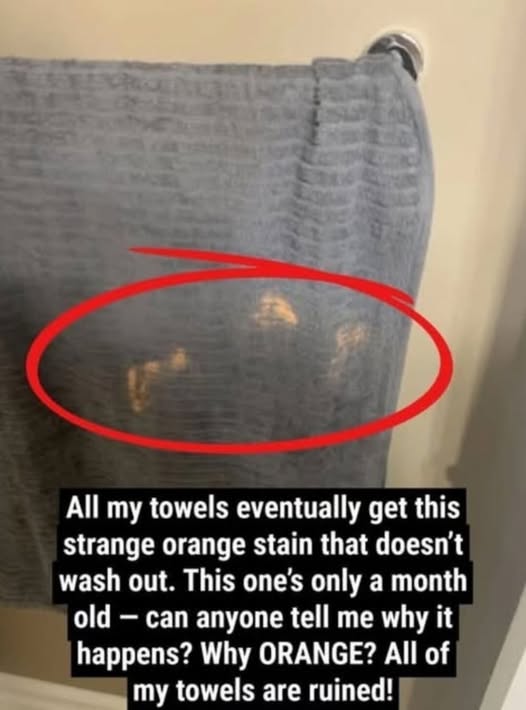
If your dark towels keep developing strange orange, yellow, or even pinkish patches that refuse to wash out, you’re not alone. And the frustrating part? It often happens to towels that are barely a few weeks old.
The most common culprit is benzoyl peroxide — a powerful acne-treatment ingredient found in many popular face washes, creams, and spot treatments. Brands that target breakouts frequently include it because it kills acne-causing bacteria effectively. But while it works wonders on skin, it can be brutal on fabric.
Here’s why.
Benzoyl peroxide is a strong oxidizing agent. In simple terms, it behaves very similarly to bleach. When it comes into contact with dyed fabric — especially dark colors like black, navy, charcoal, or deep blue — it breaks down the pigment molecules in the material.
And that’s when the “orange mystery” begins.
Dark fabrics are made from layered dye pigments. When benzoyl peroxide starts stripping color, it doesn’t remove everything evenly. It destroys certain pigments first, often leaving behind warm base tones — which appear orange, rust-colored, or pink.
That’s why the stains are almost always the same strange shade.
If the mark on your towel is lighter than the surrounding fabric, it’s not technically a stain at all — it’s bleach damage. The dye has been chemically removed. Once that happens, no detergent, soaking method, or stain remover can restore the original color. The pigment is gone.
Another frustrating detail? Even small traces of residue can cause damage later. If you wash your face with an acne product at night and dry it with a dark towel before the product has fully rinsed off, the reaction can continue slowly in the fabric. Sometimes the mark doesn’t appear until after washing.
Although benzoyl peroxide is the most common reason, there are a few less frequent possibilities:
Rust in old plumbing can leave reddish streaks — but these are usually darker and irregular.
• A harmless bathroom bacteria called Serratia marcescens can create pinkish residue — but that wipes away during cleaning and doesn’t bleach fabric.
• Hair products containing lightening agents may cause similar fading.
However, when the marks are permanent and lighter than the towel, benzoyl peroxide is almost always responsible.
How to Prevent It
If you use acne treatments regularly, try these simple steps:
Switch to white or light-colored face towels.
• Rinse your skin thoroughly before drying.
• Let products fully absorb before touching fabrics.
• Wash affected items separately.
• Consider using products with salicylic acid instead, which does not bleach fabric.
If the damage has already happened, the towel can still be useful — just not pretty. Many people repurpose them as cleaning cloths, gym towels, or pet towels.
It’s incredibly frustrating to feel like all your towels are being “ruined,” especially when you’re doing everything right with laundry. But once you understand the chemical reaction behind it, the mystery makes sense.
Sometimes the problem isn’t your washing machine at all — it’s what’s on your skin.