
source: freezelight/Wikimedia
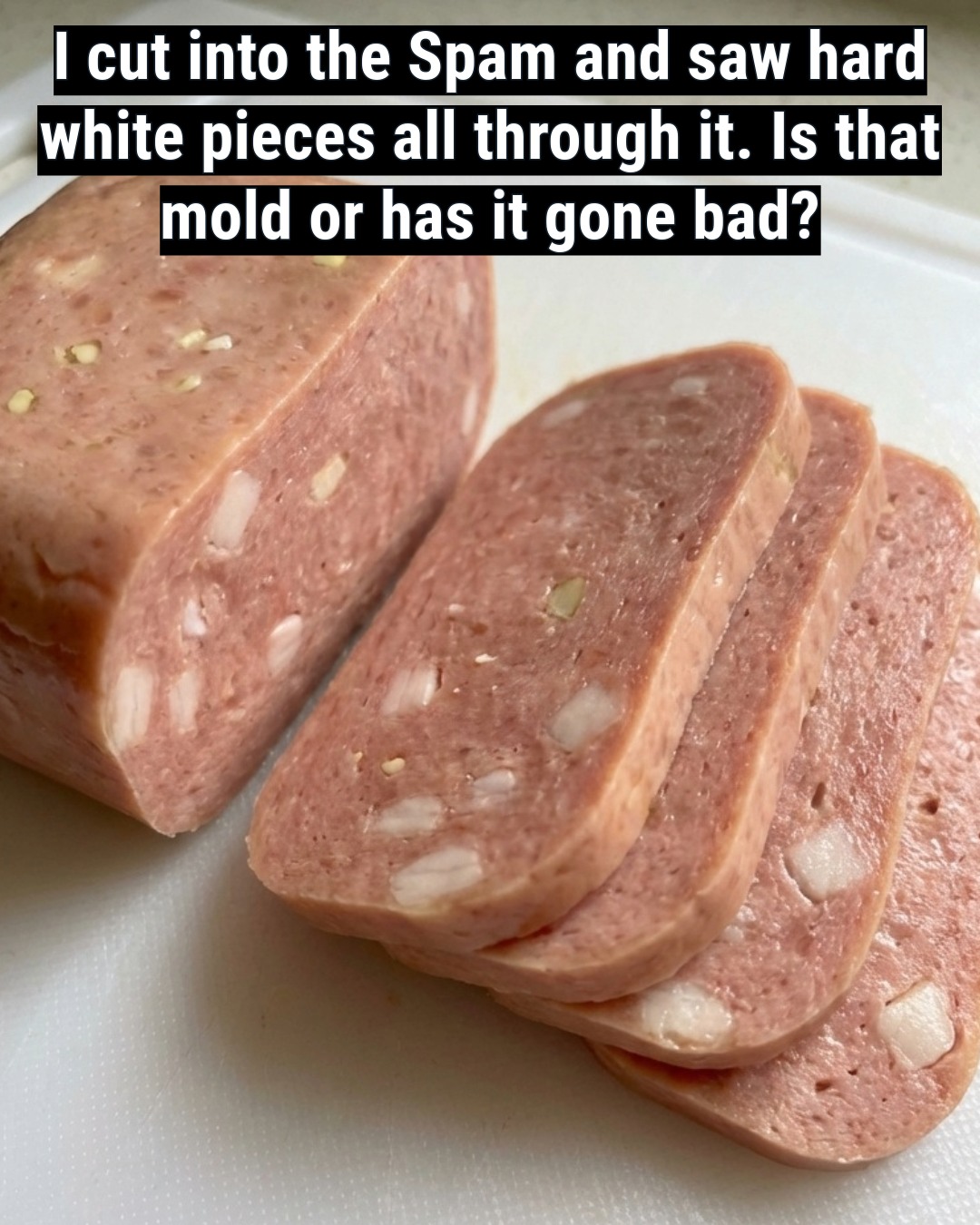
I cut open a can of Spam one day and right away saw white lumps of fat in the Spam. My initial reaction was that they looked like mold. I just stood there staring at them, questioning if I had possibly ruined my lunch. If you have ever found white specks in your canned meat and instantly panicked, I totally understand.
What is Inside of Spam?
To begin to calm my fears, I needed to learn what is inside of Spam. Spam is a pre-cooked canned meat product, created by combining pork and ham. The main components of Spam are pork and ham, salt, water, modified potato starch, sugar, and sodium nitrite (preservative). So, that’s it, no weird lumps added to your Spam.
Like most processed foods, Spam contains pork fat within the meat itself because Spam is created using the entire cut of pork, including both the lean meat portion and fat portions. Fat is used for a variety of purposes and is not just “filler,” it adds to texture, moisture, and overall flavor of the Spam. Without fat, Spam would be dry and crumbly, not sliceable and moist.
Spam is made from cutting and grinding the meat together with seasoning and preservatives; placing the meat mixture into cans; sealing the cans; and then cooking the meat inside of the cans. This sealed cooking method is important for ensuring that the canned meat is safe for long-term storage.

What Are Those White Lumps in Spam Actually?
Upon researching and reading labels, I discovered that the white lumps of fat in Spam are normally solidified fat. Occasionally, you might find tiny particles of connective tissue in the fat as well, which is perfectly normal in processed meats.
Here is what happens: solidified fat has a white or off-white appearance. Pork fat appears white when it is cold and solidified, and when you store Spam in the fridge, the fat will become even firmer.
One reassuring factor for me was realizing that the white spots in Spam were uniform throughout the can. Mold will not spread evenly throughout an enclosed product such as a can of Spam. Instead, mold typically forms on the surface of the product in clumps, not dispersed throughout the product.
For me, the simplest way to determine if your white lumps in Spam are mold or just fat is to examine their texture and uniformity. If the white lumps are uniform and resemble part of the meat’s composition, you’re likely just viewing fat.
Is It Mold Or Just Fat?
We need to answer the obvious question now: Is Spam mold when you see white chunks in it? Typically not.
Fat has its own unique features. Fat feels smooth, solid, and it fits nicely into the rest of the meat. Fat is typically white or slightly creamy in color. Upon opening the can of Spam, there will not be any strong odor, just the standard salty smell of canned meat.
On the other hand, mold has very distinctive features. Mold is generally fuzzy or powdery. Mold is commonly blue, green, gray, or black. Mold grows on the surface of products, not evenly throughout the product. Also, trust me on this, if you have a strong, sour, or otherwise bad smell coming from the Spam after you open it, it’s moldy.
Since Spam is sealed and heat-processed, mold growth inside of Spam is very rare unless the can has been damaged. However, if the can remains unopened and properly stored, the odds of mold growing internally are minimal.

When Should You Get Rid Of It?
As previously stated, while the white lumps in Spam are typically harmless solidified fat in Spam, there are circumstances in which you should discard the product entirely.
Be aware of the following warning signs:
• A bulging or warped can
• Liquid leaking from the can prior to opening
• Deep rusting or severe denting along the seams of the can
• An unpleasant or sour-smelling odor after opening
• Sliminess or an abnormal discolored appearance
If any of these signs are present, do not debate this further. Can safety largely depends upon maintaining the seal of the container. When the seal fails, bacterial growth occurs.
However, if none of these signs are apparent and everything looks, smells, and tastes normal except for the white lumps in Spam, it is safe to consume.
Something I have learned firsthand when it comes to food safety is this: when determining the quality of packaged food, the smell and overall condition of the packaging are much more relevant than the aesthetics of the product.
How They Dissolve When You Cook Them
While frying the Spam for the first time, I observed that the firm white chunks began to dissolve into the meat. What I realized was that fat changes states due to heat.
When pork fat is cold and solidified, it is white. When heated, it becomes liquid and translucent. When fat dissolves during cooking, it is absorbed into the surrounding meat, creating a juicier texture and crispy exterior on the Spam.
When I fried several slices of Spam, the white lumps simply dissolved into the meat. That alone gave me enough confidence to realize I was not dealing with anything harmful.
Therefore, when you view white lumps in Spam and panic, breathe deeply. In nearly all normal circumstances, you are merely observing solidified fat in Spam performing its function.
Check the can. Check the smell of the product. Examine for abnormal coloration or texture compared to normal fat. If everything appears normal, you have no reason to panic.
For me, when I observe those white specks in Spam today, I am confident in knowing exactly what I’m looking at. Not mold. Not contamination. Just part of what is inside of Spam and part of why it tastes so good.