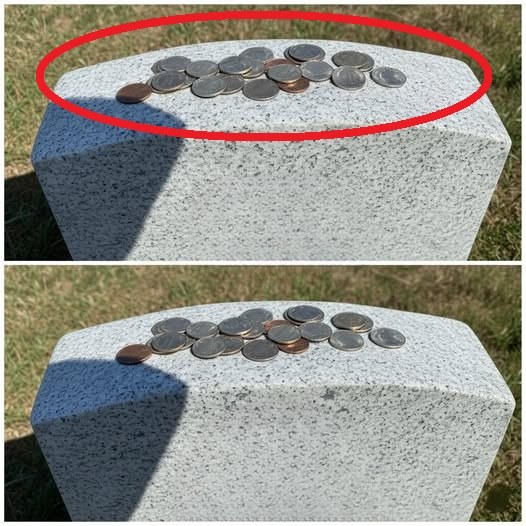

If you’ve ever walked through a cemetery, particularly a military one, you might have noticed small coins left atop gravestones. These coins often go unnoticed, dismissed as simple markers of visitation or hasty gestures made without much thought. But the practice of leaving coins on graves holds far more significance than it might appear at first glance. Each coin — whether it’s a penny, nickel, dime, or quarter — carries a distinct, meaningful message, representing everything from remembrance to deep, personal connections forged in battle.
This quiet tradition has deep roots, transcending generations and cultures, and is especially meaningful in military cemeteries where the bonds between service members are honored with simple yet powerful symbols. Here’s a deeper look into the significance, practical implications, and cultural history of this powerful ritual.
The Hidden Meaning Behind Coins on Gravestones
At first glance, a coin on a gravestone might seem like a casual or even accidental gesture. But there’s much more to this practice than meets the eye. Each coin left behind carries a specific meaning, often unspoken, that conveys emotions, memories, and a shared history between the living and the deceased.
A Gesture of Remembrance
The most common coin placed on a gravestone is a penny. While pennies are of minimal monetary value, their emotional weight is immeasurable. The act of leaving a penny often signifies “I was here” — a simple statement of presence and remembrance. When someone leaves a penny on a grave, they are acknowledging the deceased, even if they did not know them personally. It’s a gesture that says, “Your life mattered. You are not forgotten.”
In the context of military cemeteries, this simple act can provide comfort to the families of the fallen. Even if they don’t know who left the penny, the family understands the significance — that someone took the time to recognize their loved one’s life, offering a quiet sense of peace. The penny becomes a small but meaningful symbol that reminds us that death does not erase a person’s legacy.
A Symbol of Shared Service and Sacrifice
A nickel on a gravestone carries a different, more personal meaning. This coin indicates a deeper connection between the person who left it and the deceased. A nickel signifies that the two individuals served together — perhaps in boot camp, training exercises, or in the early days of their military service.
This subtle but powerful gesture acknowledges the shared hardships and experiences that soldiers undergo together. These bonds formed in difficult conditions, whether through intense training or the shared fears of war, create a brotherhood that lasts even after death. The nickel, then, becomes a symbol of solidarity, mutual respect, and an unspoken connection that transcends time.
A Sign of Combat Partnership
A dime on a gravestone is a far more personal and intimate tribute. It is a sign that the two individuals did not just serve together — they fought side by side. In the heat of battle, the bonds between soldiers are forged in ways that are difficult to describe. The shared experiences of combat, the dangers they faced together, and the moments when their lives were intertwined in survival create an unbreakable bond.
Leaving a dime on a grave signifies that the person was not only a fellow soldier but a true combat partner. It says, “We were in this together. We fought together, and I stood beside you.” The dime is a tribute to the deep personal bond formed in the most extreme circumstances.
A Heartfelt Tribute to a Fallen Soldier
The quarter is perhaps the most significant coin to leave on a gravestone. It carries the heaviest emotional weight, as it signifies that the person leaving the coin was there when the soldier died. This coin represents not just a memory of a fallen comrade but the final moments shared between the two.
Leaving a quarter on a grave says, “I was with you at the end.” It speaks volumes about the relationship between the deceased and the person paying tribute. Whether they were with the soldier in their final moments, attempted to save them, or simply shared the pain of their passing, the quarter serves as an unspoken symbol of the ultimate sacrifice and the deep bond between comrades. It’s one of the most intimate and respectful gestures someone can make to honor a fallen hero.
Practical Implications for People, Consumers, and Businesses
The tradition of leaving coins on gravestones is not only a powerful emotional practice but also has practical implications, particularly in the context of cemeteries and veteran organizations.
Symbolism and Emotional Comfort
For the families of fallen soldiers, the presence of coins on gravestones offers a sense of comfort and reassurance. The tradition provides an emotional connection to their loved ones, knowing that others, even strangers, are remembering and honoring their sacrifice. This can be especially important for families who may not be able to visit the graves of their loved ones regularly, offering a way to maintain a bond across time and space.
Moreover, leaving a coin on a grave — whether as a tribute to a fallen soldier or simply as a sign of respect — helps keep the memory of the deceased alive. It’s a way of telling future generations that the story of their loved one has not been forgotten.
Military and Veterans’ Fundraising
In many cemeteries, particularly those that are dedicated to military service members, the coins left behind are occasionally collected and used for charitable purposes. This can include donations to veteran organizations, which provide critical services to those who have served in the military. These small donations — collected over time from countless coins left on gravestones — can make a tangible difference in the lives of veterans and their families.
Some cemeteries have set up programs where the coins are gathered, counted, and donated to causes that support veterans’ healthcare, housing, and education. This means that the pennies, nickels, dimes, and quarters left behind on gravestones have a secondary function — they not only serve as personal tributes but also as contributions to a larger cause.
Historical and Cultural Context
The tradition of leaving coins on graves is deeply rooted in history and spans various cultures, from ancient rituals to modern-day practices.
Ancient Traditions of Burial Offerings
The act of placing coins on graves is thought to have ancient origins. In ancient Greece and Rome, coins were often placed on the eyes of the deceased or in their mouths to pay for their passage to the afterlife. This practice was based on the belief that the deceased would need money to pay Charon, the mythical ferryman, who would transport their souls across the River Styx to the underworld.
Over time, this practice evolved into the custom of leaving coins on gravestones as a tribute to the deceased. The coins, still a form of symbolic currency, represent a form of payment for the deceased’s journey or a gesture of respect and remembrance.
Military and Post-War Symbolism
In more recent history, especially after the Vietnam War, the tradition of leaving coins on military gravestones became more widespread. During the intense political discourse of the era, veterans wanted to honor their fallen comrades without drawing too much attention. Leaving a coin on a gravestone was a quiet, subtle way to pay tribute without the need for elaborate ceremonies or notes. It became an unspoken language of respect between veterans, a simple yet profound way to remember those who had served and sacrificed.
Tips, Insights, and Takeaways
For those unfamiliar with the tradition of leaving coins on gravestones, it can seem like a small, insignificant act. However, it carries with it deep emotional and cultural significance. Here are a few things to keep in mind if you encounter this practice:
1. Don’t Disturb the Coins
If you come across a coin on a gravestone, it’s important to resist the urge to remove it. These coins are not left by accident but are deliberately placed as a sign of respect and remembrance. Removing them could be seen as a violation of that gesture.
2. Understand the Meaning
While the tradition is most commonly associated with military cemeteries, it’s important to recognize that the coins carry different meanings depending on their denomination. A penny signifies remembrance, a nickel indicates shared service, a dime represents a bond forged in combat, and a quarter indicates the ultimate sacrifice. Each coin tells a story, and understanding these meanings can deepen your appreciation for the ritual.
3. Respect the Tradition
While the tradition may seem small or simple, it holds great cultural and emotional value. Whether you’re visiting a military cemetery or simply encountering a coin left on a grave, take a moment to acknowledge its significance. It serves as a reminder that the deceased are remembered, honored, and celebrated in a way that transcends time and generations.
Conclusion: A Quiet, Powerful Tribute
The tradition of leaving coins on gravestones is a simple yet powerful gesture that carries profound meaning. Whether it’s a penny, nickel, dime, or quarter, each coin tells a unique story of remembrance, respect, and camaraderie. For those who understand its significance, the next time you come across a coin on a gravestone, you’ll recognize it for what it truly is — a quiet language of grief, respect, and remembrance.