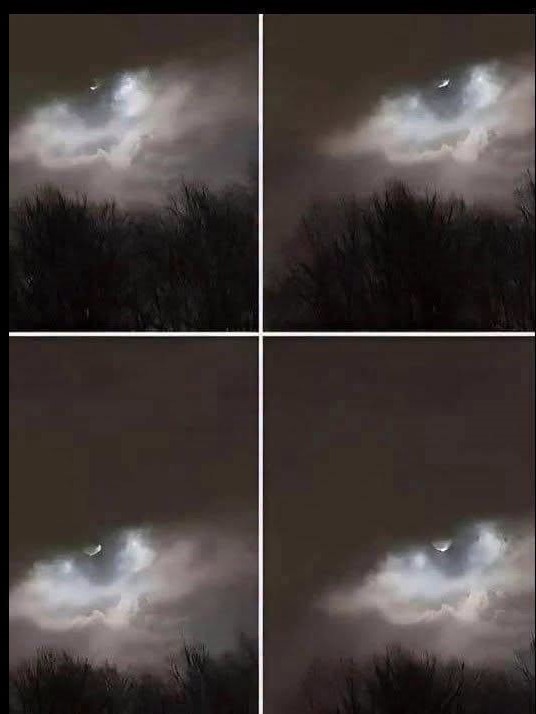
An unusual cloud photographed on June 22, 2026, about 21 kilometers from a quiet town has drawn widespread attention online. What began as an ordinary scene quickly sparked curiosity and debate across social media.
At first glance, the image appears simple—just a cloud formation in the sky. However, interpretations of its shape have varied dramatically, turning it into something far more intriguing.
Many viewers claimed to see recognizable forms or symbolic images within the cloud. This led to speculation ranging from natural curiosity to more mysterious or supernatural explanations.
The fascination surrounding the image highlights a common human tendency: the desire to find meaning in randomness. Even familiar shapes can feel significant when seen in unexpected places.
This phenomenon is known as pareidolia, a psychological effect where the brain interprets vague patterns as familiar objects, such as faces or figures. It plays a major role in how people perceive ambiguous visuals.
Scientifically, the cloud itself can be explained through normal atmospheric processes, including wind movement, moisture levels, and lighting conditions. There is nothing inherently unusual about its formation.
Despite this, the emotional reaction it generates is real. People connect with images differently, often influenced by personal beliefs, imagination, and cultural context.
In the end, the cloud is less about mystery in the sky and more about human perception. It serves as a reminder that meaning is often something we create, not something inherently present.