
You’re standing in your
kitchen making a sandwich. The bread is ready, the condiments are waiting, and you peel back a slice of ham from the package.
Then you notice something unusual.
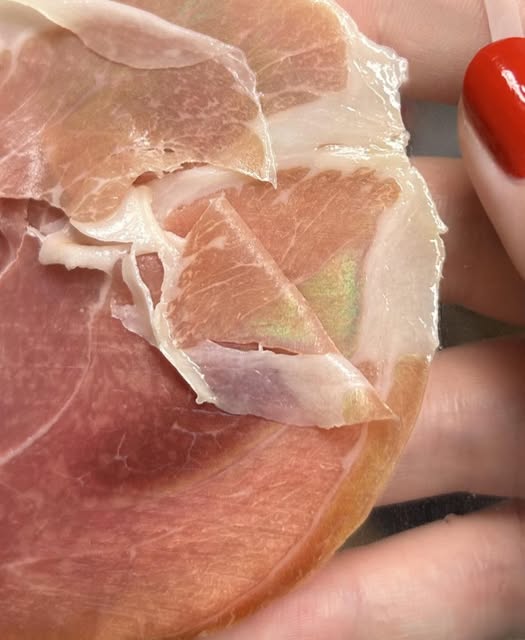
Across the surface of the ham is a strange shimmer — a faint rainbow of colors that looks almost like an oil slick or the shine from a soap bubble.
For a moment, you pause.
Is the meat spoiled?
Is it safe to eat?
Should you throw it away?
This reaction is incredibly common. Many people feel uneasy when they see a rainbow sheen on ham or other deli meats because it looks unnatural. After all, most foods aren’t supposed to sparkle like a prism.
But here’s the reassuring truth:
That rainbow shine is usually completely harmless.
In fact, it’s a natural optical effect caused by the way light interacts with the surface of the meat. The phenomenon even has a scientific name: iridescence.
Understanding why this happens can turn what seems like a warning sign into something surprisingly fascinating.
Let’s explore what causes the rainbow sheen on ham, why it happens more often with deli meats, and how to tell the difference between harmless iridescence and real spoilage.
The First Time People Notice the Rainbow Effect
For many people, the first encounter with rainbow-colored ham is a moment of confusion.
You might see it while:
- Making a sandwich
- Opening a fresh deli package
- Preparing a charcuterie board
- Slicing leftover holiday ham
The light catches the surface of the meat, and suddenly streaks of pink, green, purple, and blue appear.
It looks almost metallic.
Some people even describe it as if the meat has been sprayed with glitter.
Because food safety is something we’re all taught to take seriously, the instinctive reaction is to question whether the meat has gone bad.
But in most cases, the rainbow sheen has nothing to do with bacteria or spoilage.
Instead, it’s an optical illusion created by physics and the structure of the meat itself.
What Is Iridescence?
The rainbow shimmer on ham is an example of iridescence.
Iridescence occurs when light reflects off a surface and splits into multiple colors.
You’ve probably seen this phenomenon many times before without realizing it.
Common examples include:
- Soap bubbles
- Oil on wet pavement
- Peacock feathers
- Butterfly wings
- The inside of seashells
In each of these cases, the surface structure causes light waves to bend and scatter in different ways.
When the reflected light reaches your eyes, you see a spectrum of colors.
The same thing can happen with certain foods, especially thinly sliced meats.
Why Ham Is Especially Likely to Show This Effect
Ham isn’t the only food that can display iridescence, but it’s one of the most common examples.
Several factors make it particularly prone to showing a rainbow sheen.
These include:
- The smoothness of the sliced surface
- The arrangement of muscle fibers
- The curing and processing methods used in deli meats
When these factors combine, they create the perfect conditions for light to scatter and produce colorful reflections.
Let’s break each one down.
Light Reflection on Smooth Surfaces
The smoother a surface is, the more effectively it reflects light.
Think about the difference between shining a flashlight on a mirror versus shining it on a rough brick wall.
The mirror reflects light clearly, while the brick scatters it in random directions.
Thinly sliced deli meat has a surprisingly smooth surface, especially when cut with sharp commercial slicers.
When light hits that smooth surface, it can bounce back in very specific patterns.
Under certain conditions, this reflection splits into multiple wavelengths — the different colors we see as a rainbow.
The Role of Muscle Fibers
Ham comes from pork muscle, and muscle tissue has a very specific internal structure.
Inside the meat are long protein fibers that run parallel to one another.
When ham is sliced very thinly, these fibers can align in ways that act almost like microscopic mirrors.
This alignment helps reflect light in a consistent direction.
When multiple reflections occur at slightly different angles, the light interferes with itself and produces the colorful iridescent effect.
In other words, the rainbow sheen is partly the result of the natural structure of muscle tissue.
The Impact of Curing and Processing
Ham is usually a cured meat, meaning it has been treated with salt, nitrates, and other preserving ingredients.
These curing processes slightly alter the structure of the meat.
They affect how proteins bind together and how moisture is retained.
This can make the meat’s surface smoother and more reflective.
Because of this, cured meats such as ham, roast beef, and corned beef tend to show the rainbow sheen more often than fresh cuts of meat.
The curing process doesn’t cause the rainbow effect directly, but it makes the conditions for iridescence more likely.
Why Thin Slices Make the Effect Stronger
If you’ve ever bought freshly sliced deli meat, you may have noticed that the slices are incredibly thin.
This thinness is another key factor in the rainbow phenomenon.
Thin slices allow light to interact with the meat’s internal layers more easily.
The light waves reflect off multiple surfaces within the slice.
When these reflections combine, they create interference patterns that appear as colorful streaks.
This is similar to how light behaves when passing through thin films, such as soap bubbles or oil layers.
The thinner and smoother the surface, the stronger the iridescent effect becomes.
Is the Rainbow Sheen a Sign of Spoilage?
The big question most people ask is simple:
Is it safe to eat?
In the vast majority of cases, the answer is yes.
The rainbow sheen alone does not indicate spoilage.
It doesn’t mean the meat is contaminated or unsafe.
However, it’s still important to check for other signs that could indicate the ham has gone bad.
Food safety should always be based on multiple indicators, not just appearance.
Signs That Ham Is Still Safe to Eat
When evaluating deli meat, you should consider three main factors:
Smell
Fresh ham has a mild, slightly salty aroma.
If the meat smells sour, sulfur-like, or unpleasantly strong, it’s best to discard it.
Your nose is one of the best tools for detecting spoilage.
Texture
Good-quality ham should feel slightly moist but not sticky.
If the surface feels slimy or overly slick, bacteria may be developing.
That’s a clear sign the meat should not be eaten.
Color
Normal ham ranges from pink to light red.
While rainbow reflections are harmless, dull gray patches or greenish discoloration could indicate spoilage.
If you see these changes, it’s safer to throw the meat away.
Why People Often Misinterpret the Rainbow
Because the rainbow sheen looks unusual, many people assume it must be a warning sign.
In reality, our brains are simply not used to seeing colorful reflections on food.
Most foods appear matte and uniform.
So when something suddenly sparkles with color, it feels suspicious.
But the truth is that iridescence is a natural physical phenomenon that occurs in many environments.
It just happens to appear occasionally in certain foods.
Other Foods That Can Show Iridescence
Ham isn’t the only food that can display this effect.
Other meats and foods that sometimes show similar rainbow patterns include:
- Roast beef
- Corned beef
- Bacon
- Certain types of fish
- Some cured poultry meats
The same principles apply: smooth surfaces, thin slices, and reflective structures can all contribute to iridescence.
So if you notice a rainbow shimmer on another type of deli meat, it’s likely caused by the same harmless phenomenon.
Can You Prevent the Rainbow Effect?
If the rainbow sheen bothers you, there are a few simple steps that may reduce how noticeable it appears.
Slice the Meat Thicker
Thicker slices create rougher surfaces that scatter light more randomly.
This reduces the sharp reflections that cause iridescence.
Heat the Ham Slightly
Cooking or warming the meat changes its surface texture and can reduce the rainbow effect.
A quick pan-fry or microwave heating usually eliminates the shimmer.
Store the Meat Properly
Keeping deli meat sealed in airtight containers helps maintain its texture and prevents unwanted surface changes.
While this won’t eliminate iridescence completely, it can reduce how often it appears.
Why Science Shows Up in Everyday Food
One of the interesting things about the rainbow sheen on ham is how it reminds us that science is everywhere.
The same physics principles that explain colorful butterfly wings and shimmering soap bubbles can also appear on something as ordinary as a sandwich ingredient.
Food often reveals fascinating interactions between light, chemistry, and biology.
Most of the time, we just don’t notice them.
But once you understand the science, everyday experiences become a little more interesting.
A Fun Fact for the Dinner Table
The next time someone notices the rainbow effect on ham, you’ll know exactly what’s happening.
Instead of worrying, you can explain that it’s simply iridescence — a harmless reflection of light caused by the structure of the meat.
It’s a small reminder that even simple foods can have surprisingly complex science behind them.
And sometimes the strange things we see in the kitchen are actually perfectly normal.
The Bottom Line
If your ham has a rainbow sheen, there’s usually no reason to panic.
The colorful shimmer is typically just light reflecting off smooth, thin slices of cured meat.
It’s a natural optical effect known as iridescence and doesn’t mean the food is spoiled.
As long as the ham smells normal, feels fresh, and hasn’t changed color in unusual ways, it should be perfectly safe to eat.
So the next time you open a package of ham and notice that subtle rainbow glow, you can relax.
It’s not a warning sign.
It’s simply science at work — right there on your sandwich.