
A Parent’s Urgent Concern the Night Before a Big Event
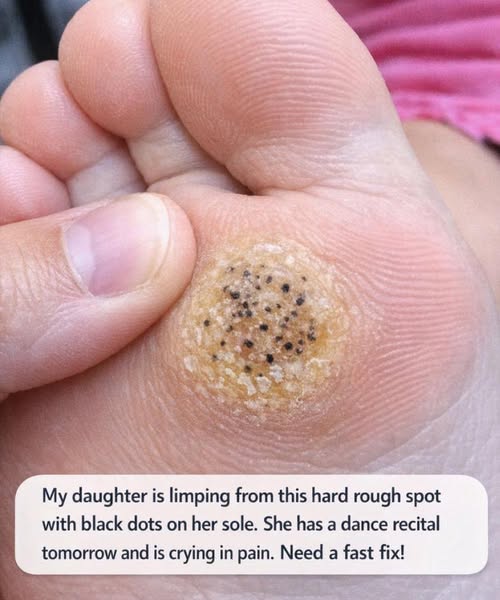
There are few things more distressing for a parent than watching their child in pain—especially when that pain threatens to disrupt something they’ve been eagerly anticipating. If your daughter is limping, clearly uncomfortable, and you’ve noticed a rough, hardened patch with tiny black dots on the bottom of her foot, it’s completely natural to feel worried and unsure of what to do next.
The situation becomes even more stressful when time is limited. With a dance recital scheduled for tomorrow, your priority is not only to understand what’s causing the issue but also to find a way to ease her discomfort quickly so she can still participate if possible.
This guide is designed to walk you through everything you need to know—from identifying the problem to taking immediate action for relief. You’ll also learn how to support her physically and emotionally so she can feel confident and comfortable heading into her performance.
1. What That Hard, Rough Spot With Black Dots Might Be
When you see a hardened, uneven patch of skin on the sole of your child’s foot accompanied by tiny black specks, one of the most likely explanations is a plantar wart.
Plantar warts are a common foot condition in children and active individuals. They are caused by a strain of the human papillomavirus (HPV), which enters the skin through small cuts or weak spots. Because children often walk barefoot in places like locker rooms, dance studios, or pool areas, they can be more susceptible to this type of infection.
The black dots you see are not dirt or debris. They are actually tiny blood vessels that have clotted within the wart. This detail is one of the most recognizable features that helps distinguish plantar warts from other foot conditions.
These warts typically develop on weight-bearing areas of the foot, such as the heel or the ball. Because of this, they are often pushed inward by body weight, which can make them especially painful when walking, standing, or dancing.
Over time, the surrounding skin may thicken, creating a callus-like appearance. This can make the wart blend in with the rest of the foot, but the pain and the black dots are key indicators that something more is going on.
2. How to Tell If It’s a Plantar Wart or Something Else
Before taking action, it’s helpful to confirm what you’re dealing with. Several common foot issues can look somewhat similar at first glance, but there are important differences.
Plantar Wart
A plantar wart usually appears as a small, rough growth with a grainy surface. The presence of black dots is a major clue. When pressure is applied—especially from the sides rather than directly on top—it often causes noticeable pain.
Splinter
A splinter typically has a visible entry point and may show a small fragment embedded in the skin. Unlike a wart, it does not have multiple black dots. The pain is usually sharp and localized.
Blister
Blisters are filled with fluid and tend to form after friction or burns. They appear smooth and raised, not rough, and they don’t contain black specks.
Callus
Calluses are thickened areas of skin caused by repeated pressure or friction. While they can feel rough, they are generally less sensitive than warts and lack the characteristic black dots.
Taking a moment to gently examine the area under good lighting can help you make a more accurate assessment. If pressing on the spot causes your daughter significant discomfort, especially when pressure is applied from the sides, a plantar wart is likely the cause.
3. When Pain Signals Something More Serious
While plantar warts are usually not dangerous, there are times when symptoms may indicate a more serious issue that requires prompt medical attention.
If your daughter is experiencing intense pain that prevents her from putting weight on her foot, it’s important not to ignore it. Similarly, if you notice redness, swelling, warmth, or any discharge such as pus, these could be signs of an infection.
Fever or rapidly worsening symptoms are also reasons to seek medical care right away.
In these situations, contacting a healthcare provider or visiting an urgent care center can help ensure that your daughter receives appropriate treatment without delay.
4. Quick Relief You Can Try at Home Right Now
With the recital just around the corner, your focus is likely on immediate comfort. While removing a plantar wart completely takes time, there are steps you can take to reduce pain quickly.
Start by soaking your daughter’s foot in warm water for about 10 to 15 minutes. This helps soften the skin and can make the area less sensitive. After soaking, gently dry the foot with a clean towel.
You can then apply an over-the-counter treatment designed for warts. Many of these products contain salicylic acid, which works by gradually breaking down the thickened skin.
For immediate comfort, cushioning the area is one of the most effective strategies. Using a soft pad or a donut-shaped cushion can help redistribute pressure so the wart isn’t directly pressed when she walks or stands.
If necessary, a child-safe pain reliever can also help reduce discomfort and inflammation. Always follow dosage guidelines carefully.
5. Simple Padding Techniques to Reduce Pressure
One of the biggest challenges with plantar warts is the pressure they endure during movement. For a dancer, this becomes even more significant.
To help your daughter move more comfortably, consider using adhesive pads specifically designed for foot pain. These often have a hole in the center, allowing the wart to sit without direct pressure.
Place the pad over the affected area and secure it with medical or athletic tape. Make sure the tape is snug enough to hold the pad in place but not so tight that it restricts circulation.
If she’ll be wearing dance shoes, adding a gel insole can provide extra cushioning and reduce impact during movement.
6. Adjusting Shoes and Costume for Comfort
Small adjustments can make a big difference when your child needs to perform despite discomfort.
First, check the fit of her dance shoes. Shoes that are too tight can increase pressure on the wart and make the pain worse. If possible, choose a pair that offers a bit more room.
You can also add soft lining or padding inside the shoe to reduce friction. Materials like moleskin are often used for this purpose.
If her costume includes tights or foot coverings, make sure they are not overly tight. Even a small adjustment can relieve pressure and improve comfort.
7. What to Avoid Doing in a Hurry
When you’re under time pressure, it can be tempting to try quick fixes that promise immediate results. However, some actions can actually make the situation worse.
Avoid cutting, scraping, or picking at the wart. This can cause bleeding, increase pain, and raise the risk of infection.
Similarly, do not attempt to burn or freeze the wart at home using unsafe methods. These approaches can damage healthy skin and lead to complications.
Stick to gentle, proven methods that focus on comfort rather than aggressive removal.
8. Over-the-Counter Options: What Helps Now vs. Later
Pharmacies offer a range of products for treating warts. While these can be effective, it’s important to understand what they can and cannot do in the short term.
Salicylic acid treatments are commonly used and can help soften the wart, but they require consistent use over several weeks to fully remove it.
For immediate relief, look for cushioning pads or protective coverings. Some topical products may also provide temporary numbing effects, but these should be used cautiously and according to instructions.
If you’re unsure which product is best, a pharmacist can often provide helpful guidance.
9. Professional Treatment Options for Faster Results
If the pain is severe or the wart doesn’t improve, a healthcare professional can offer more advanced treatments.
One common method is cryotherapy, which involves freezing the wart. Another option is laser therapy, which targets the tissue directly.
Doctors may also prescribe stronger medications or perform minor procedures to remove the wart more quickly.
While these treatments can be effective, they may not provide instant relief, so it’s still important to focus on comfort measures for the recital.
10. Supporting Your Child Emotionally
Physical pain is only part of the challenge. Your daughter may also feel anxious, disappointed, or worried about her performance.
Reassure her that her well-being is the top priority. Let her know that it’s okay to feel upset and that you’re there to help her through it.
Encourage open conversation so she can express her concerns. Simple techniques like deep breathing or visualization can help calm nerves before the recital.
Remind her that doing her best is what matters—not perfection.
11. Helping Her Perform With Confidence
If she decides to go ahead with the recital, help her prepare in a way that minimizes discomfort.
Make sure her foot is properly padded and protected before she puts on her shoes. Encourage her to warm up gently and pay attention to how her foot feels.
Let her know that it’s okay to take breaks if needed and that she doesn’t have to push through severe pain.
Your support and reassurance can make a big difference in how she approaches the performance.
12. Preventing Future Foot Problems
Once this situation is under control, taking steps to prevent future issues can help avoid similar stress.
Encourage your child to wear protective footwear in shared spaces like locker rooms and pools. Keeping feet clean and dry is also important.
Regularly check her feet for any unusual spots or changes. Catching problems early makes them much easier to manage.
13. When to Follow Up After the Recital
After the event, it’s a good idea to monitor the wart and continue treatment if needed.
If it doesn’t improve or continues to cause pain, schedule an appointment with a healthcare provider. Early treatment can prevent the wart from spreading or becoming more difficult to remove.
Final Thoughts
Facing a sudden health issue right before an important event can feel overwhelming. However, by staying calm and focusing on practical steps, you can help your daughter get through it.
While a plantar wart can be painful, there are ways to manage the discomfort so she can still participate in her recital if she feels able.
Most importantly, your support, reassurance, and quick action can turn a stressful situation into a manageable one—and help your daughter feel confident despite the challenge.