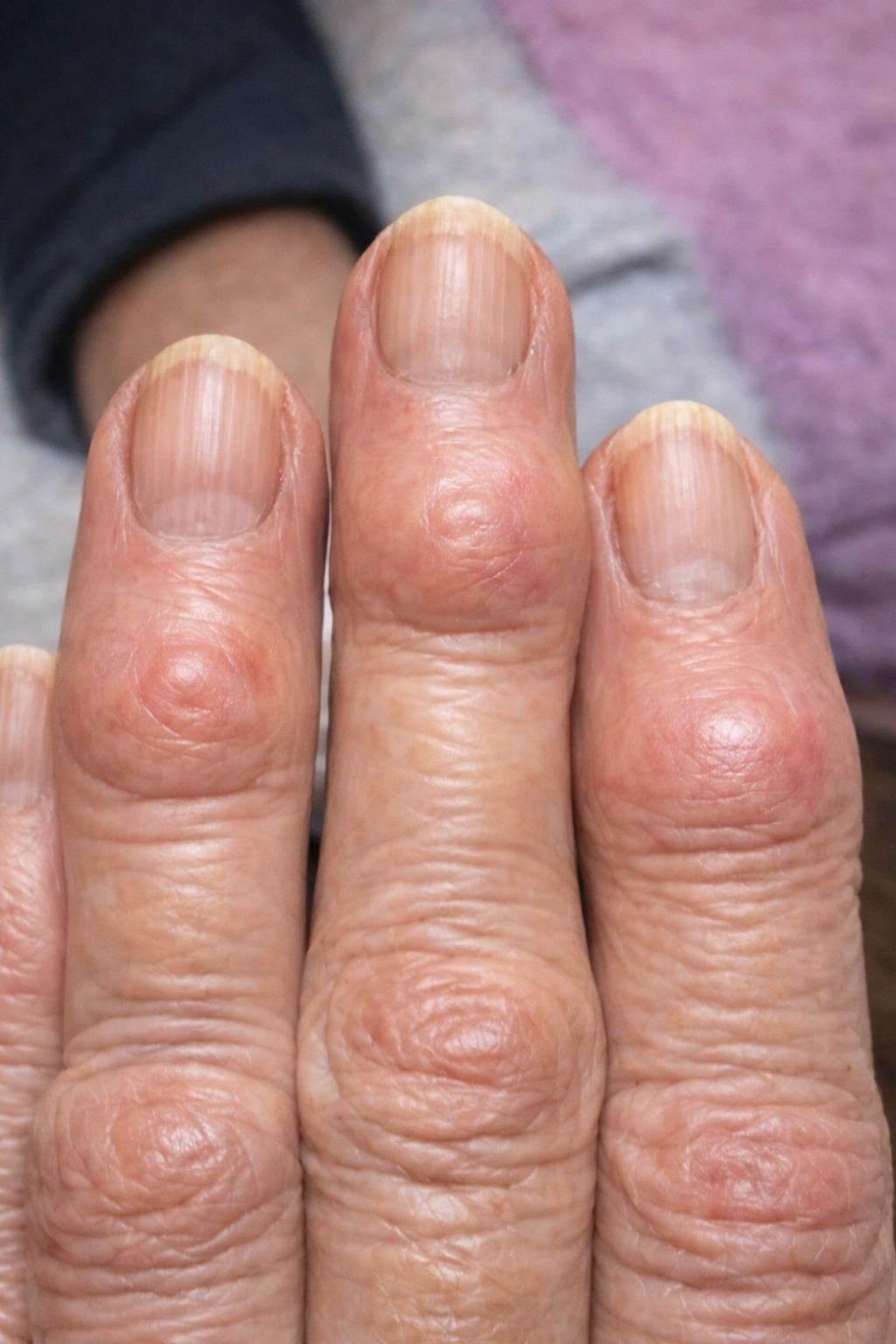

As people age, the body naturally changes, and some of these changes can feel unexpected or even concerning. One common issue is the appearance of hard bumps on the finger joints, especially near the fingertips. These bumps may look unusual and sometimes cause discomfort, leading many to wonder what they mean and whether they signal a serious problem.
If your grandmother is experiencing this, she’s not alone. These bumps are actually quite common—and in most cases, they’re a sign of osteoarthritis, not something more alarming.
Let’s explore what these bumps are, why they appear, and what can help.
What Are These Bumps?
In most cases, these bumps are known as nodes and are commonly associated with osteoarthritis. Osteoarthritis is a condition in which the protective cartilage in the joints gradually wears down over time. When this cushioning decreases, the bones begin to rub against each other. In response, the body forms extra bone as a way to stabilize the joint, which results in the hard, raised bumps seen on the fingers.
There are two common types of these finger nodes:
| Type | Location | Associated With |
|---|---|---|
| Heberden’s nodes | The joint closest to the fingertip (distal interphalangeal joint) | Most common form |
| Bouchard’s nodes | The middle joint of the finger (proximal interphalangeal joint) | Also osteoarthritis |
Why Are They Spreading?
Osteoarthritis is often a progressive condition. That means it can affect multiple joints over time. If your grandmother has nodes on one finger, it’s not unusual for them to appear on other fingers as the condition advances.
Why they spread:
- Osteoarthritis often affects both hands symmetrically
- As joints wear down, the body continues to form new bone
- The process is gradual—months or years, not days
Important: The nodes themselves aren’t “spreading” like an infection. They’re a visible sign that osteoarthritis is affecting multiple finger joints.
What Causes Osteoarthritis in the Fingers?
Several factors contribute:
- Age – Most common after 50
- Genetics – Often runs in families
- Gender – More common in women
- Previous injury – Past trauma can accelerate joint wear
- Repetitive use – Years of hand use can contribute
Are They Painful?
In the early stages, nodes can be:
- Tender or sore
- Red or inflamed
- Stiff, especially in the morning
Over time, the pain often decreases, but the bumps remain. Some people have no pain at all—just visible changes.
When to See a Doctor
While these nodes are usually benign, your grandmother should see a doctor if:
- The bumps appear suddenly or grow rapidly
- She has severe pain or swelling
- The joints become red, hot, or tender (could indicate infection or inflammatory arthritis)
- She has difficulty using her hands for daily tasks
- She has other symptoms like fever, rash, or fatigue
What Helps Manage Symptoms
Non-Medical Approaches:
- Hand exercises – Gentle stretching can maintain mobility
- Heat therapy – Warm paraffin wax baths or heating pads
- Cold therapy – Ice packs for inflammation
- Splinting – Night splints can support affected jointsInjury
- Activity modification – Using ergonomic tools
Medications (Discuss with Doctor):
- Topical creams – Capsaicin or NSAID creams
- Oral pain relievers – Acetaminophen or NSAIDs
- Prescription options – If pain is significant
Can You Prevent the Bumps?
Once nodes have formed, they don’t go away. They’re permanent changes in bone structure. However, you can help slow progression and manage symptoms:
- Maintain hand strength – Gentle exercises
- Protect joints – Avoid gripping too tightly
- Stay active – Regular movement helps all joints
- Healthy weight – Less weight = less stress on all jointsHealth
What About Rheumatoid Arthritis?
It’s worth noting that not all finger bumps are osteoarthritis. Rheumatoid arthritis (an autoimmune condition) causes different changes:
- Soft, spongy swelling (not hard bone)
- Usually affects both hands symmetrically
- Often accompanied by morning stiffness lasting >30 minutes
- May cause systemic symptoms like fatigue
If your grandmother has other symptoms, a doctor can distinguish between the two.
A Gentle Reminder
These bumps can be concerning to watch develop. They can change the appearance of hands—something that matters to many people. But for most, they’re simply a sign of aging and wear on the joints, not a dangerous condition.
Your grandmother’s hands have worked hard for a lifetime. These bumps are a visible reminder of all they’ve done.
The Bottom Line
Hard bumps on finger joints near the nails are most likely Heberden’s nodes—a common sign of osteoarthritis. They’re not contagious, not cancerous, and usually not dangerous. They may spread to other fingers over time as osteoarthritis progresses.
What helps:
- Gentle hand exercises
- Warm paraffin treatments
- Over-the-counter pain relief if needed
- Doctor visit if pain is significant or other symptoms appear