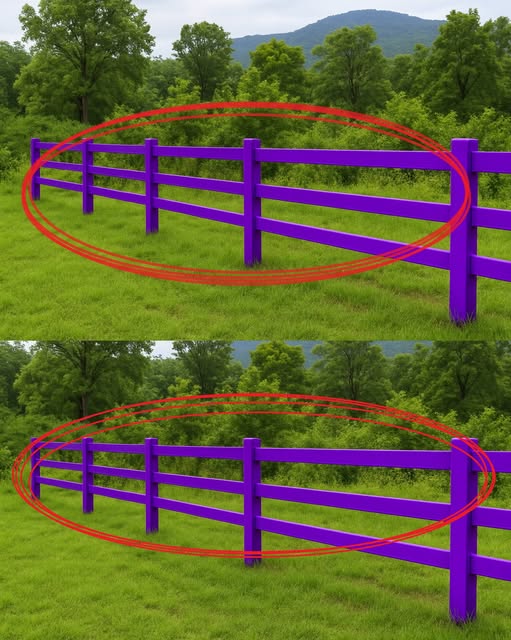

Have you ever been strolling down a quiet country road, or hiking along a secluded trail, and spotted a fence painted purple? Not just any random shade, but a bold, unmistakable purple—almost like a splash of grape Kool-Aid? At first glance, it might seem like an odd design choice or an unusual touch of whimsy. But in reality, the sight of a purple fence isn’t just an aesthetic statement; it’s a message—a legal one, in fact.
In rural areas across the United States, purple paint on fences, posts, and even trees is a secret signal that has become a widely recognized symbol: No Trespassing. It’s a simple yet effective way for property owners to mark their land and communicate their boundaries without having to post multiple “Keep Out” signs. But why purple? Why not a more conventional color, like red or orange? The history, meaning, and rules surrounding the purple fence are all rooted in practicality, legal recognition, and a dash of rural ingenuity.
The Meaning Behind the Purple Fence
So, why does a purple fence mean “no trespassing”? The answer is surprisingly practical and has evolved from local traditions into a formalized system. In many rural areas, especially in states like Arkansas, Missouri, and Tennessee, property owners use purple paint to mark their boundaries and protect their property from trespassers. While it might seem like an arbitrary choice, the color purple has specific advantages when it comes to signaling.
Purple paint is highly visible, especially in wooded areas or along hiking trails. It’s not a color you typically see on fences or posts, making it an eye-catching signal. Whether you’re walking along a country lane or hiking through a national forest, that purple stripe stands out, even from a distance. Its unusual color quickly grabs attention, making people think twice before stepping over the boundary.
This practice is known as “purple paint laws,” and in some states, it’s been codified into law as an alternative to traditional “No Trespassing” signage. It offers a cost-effective and visually striking way for landowners to communicate the message without needing to post signs that could be stolen, damaged, or simply ignored.
How It Works: The Rules of the Purple Paint Mark
While the idea of a purple fence may seem like a quirky trend, it is not as casual as just slapping on a coat of paint wherever you please. There are clear and precise rules about how and where purple paint must be applied in order for it to be legally recognized as a “no trespassing” marker. These regulations are important for ensuring that the message is visible, deliberate, and enforceable.
1. The Mark Must Be Vertical
One of the key guidelines for the purple paint is that it must be applied in vertical stripes, not random splotches or horizontal marks. This standardization ensures that the mark is immediately identifiable and unmistakably intentional. It’s not a careless mistake or an accidental drip of paint—it’s a deliberate action meant to communicate a legal message.
2. Size and Placement Matter
The stripes must also be of a certain size. Each vertical mark should be at least 1 inch wide and 8 inches long, large enough to be seen from a distance. You don’t want a tiny dot or a barely visible smear that could easily be overlooked. The idea is to make sure the paint is noticeable enough to stop a potential trespasser in their tracks.
In terms of placement, the purple marks need to be positioned between 3 and 5 feet above the ground. This is a sweet spot that ensures visibility while also preventing the marks from being hidden by tall grass, shrubbery, or other obstacles. It also means that the markings are easily visible to both pedestrians and vehicles.
3. Consistent Spacing and Coverage
To effectively mark a large property, these purple stripes need to be spaced at intervals of every 100 feet or so. This ensures that anyone walking or driving by will see the marks and be aware of the boundary line. A single stripe on one post doesn’t do the job—it must be repeated at regular intervals to clearly define the entire property line.
Why Purple Paint Works
You may be asking yourself, why purple? Why not another bright or unusual color like neon green or hot pink? There are a few reasons why purple paint has become the chosen color for this system, and its effectiveness goes beyond mere aesthetics.
1. Uniqueness and Attention-Grabbing
Purple is not a color typically associated with fences or property markers, which is precisely why it works so well. Most people don’t expect to see a fence painted purple, and that unexpected splash of color catches their attention. This makes it easy for someone to notice the boundary line, even if they weren’t actively looking for it.
Unlike traditional “No Trespassing” signs, which can be easily ignored or become faded and unreadable over time, purple marks stand out clearly and are hard to miss. The color itself draws people’s eyes, making it more likely that the message will be understood and respected.
2. Durability and Practicality
Purple paint is also more practical than a sign. Unlike a physical sign, which can be torn down, stolen, or weathered by the elements, a painted mark is permanent and harder to remove or damage. Plus, painting a fence or post with purple stripes is a relatively low-cost solution for landowners, especially when compared to the cost of multiple “No Trespassing” signs.
In some states, the purple paint law is specifically designed to offer landowners an alternative to the costly upkeep of traditional signs. The paint won’t blow away, fade, or get vandalized as easily as a sign would, making it a much more sustainable option for marking boundaries over time.
Legal Recognition and Limitations
While purple paint is widely recognized as a “no trespassing” signal in certain states, it’s important to note that not all states have laws that formally adopt it. Some states have embraced the idea and written it into law, while others may still rely heavily on traditional signage for trespassing issues. Before you start painting your fence purple, it’s important to check your local laws to ensure that this method is legally recognized in your area.
In states where purple paint is legally recognized, landowners can use the paint as an official means of communicating property boundaries, which may carry legal weight in court if a trespasser ignores the signal. However, there are some nuances. For example, certain property owners may still prefer to post additional signage alongside the purple paint to further clarify the boundary, especially if they’re unsure whether their neighbors or passersby are familiar with the purple paint laws.
When You See a Purple Fence: What You Should Do
If you happen to spot a purple fence, tree, or post on your walk, trail, or drive, take it as a clear sign: Do not cross. It’s not just a quirky color choice—it’s a signal meant to protect private property. Whether you’re hiking in the woods or walking down a rural road, be aware that these purple marks serve as a direct communication of boundaries, so it’s best to respect them.
In areas where the purple paint law is not recognized, you might find purple paint used for aesthetic reasons, but it’s still a good rule of thumb to assume that purple could signify “private property” or “keep out.”
Conclusion: The Power of the Purple Fence
What might seem like an odd choice of color for a fence is actually a practical, legal, and highly effective means of marking property boundaries. Whether in the rural countryside or on a local hiking trail, purple-painted fences and posts serve as a clear signal: “This property is private—respect it.”
Thanks to its visibility, durability, and legal recognition in many states, purple paint has become an important tool for landowners to safeguard their property without the need for bulky, easily ignored signs. So, next time you spot a purple fence, remember that it’s not just a color choice—it’s a message. A simple streak of purple can speak volumes about property rights and the importance of respecting boundaries.