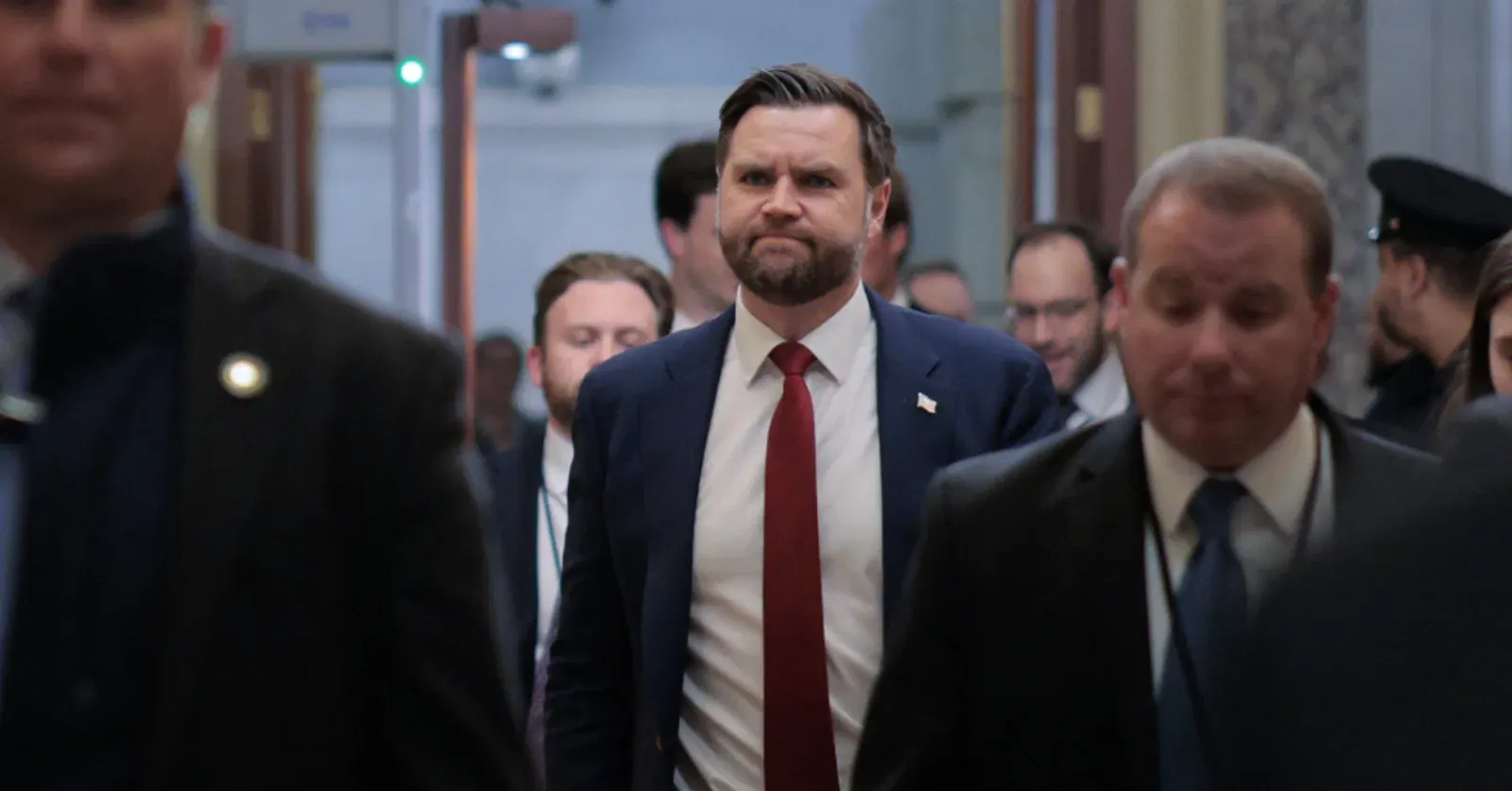
WASHINGTON, D.C. — High drama gripped the United States Senate on Tuesday as a motorized motorcade carrying Vice President JD Vance roared toward Capitol Hill, signaling an emergency intervention in a vote that threatened to derail the administration’s Western Hemisphere strategy. In a nail-biting 51-50 finish, the Vice President cast the tie-breaking vote to defeat a War Powers Resolution that would have forced President Donald J. Trump to seek congressional approval for ongoing military operations in Venezuela.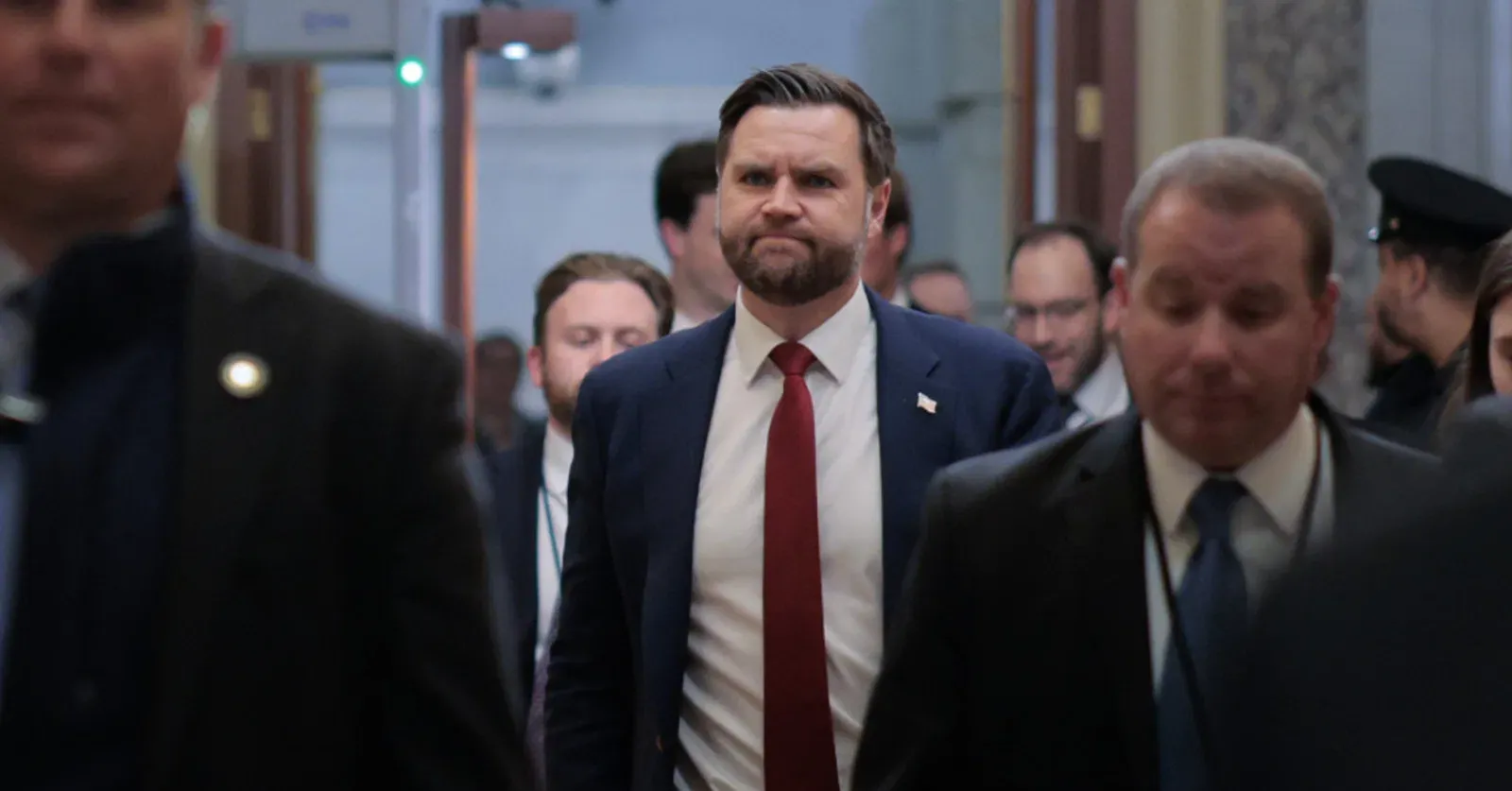 The defeat of the resolution, introduced by Senator Tim Kaine (D-VA) and co-sponsored by Rand Paul (R-KY), represents a definitive victory for the “Hegseth Doctrine” of naval and air dominance. By blocking the measure, the Senate has effectively ratified the administration’s position that the War Powers Act of 1973 is an unconstitutional “fake law” that cannot infringe upon the President’s role as Commander-in-Chief.
I. THE RUBIO DIPLOMACY: NEUTRALIZING THE GOP REBELLION
The path to 51 votes was anything but certain. Earlier in the week, the administration faced a looming insurrection from within its own party. Five Republican senators—including constitutional hawks like Josh Hawley and Todd Young—had initially signaled their support for the Kaine-Paul resolution, concerned about the scope of the naval blockade off the Venezuelan coast.
1. The Secretary’s Assurances
The turning point came during a series of closed-door briefings led by Secretary of State Marco Rubio. The former Florida Senator, drawing on his deep relationships within the chamber, provided the “personal assurances” necessary to bring the wavering Republicans back into the fold.
According to Senator Young, Rubio was explicit: while the U.S. will maintain its naval presence to secure regional stability and “take the oil,” there are no plans for U.S. ground operations. Rubio pledged that the administration would return to Congress before any “major” escalation involving boots on the ground. This nuanced diplomacy allowed Hawley and Young to reverse course, providing the GOP with the 50 votes needed to reach a tie.
2. The “GOP Five” and the Truth Social Fallout
Despite the victory, President Trump was in no mood for celebration regarding the five Republicans who initially flirted with the opposition. In a blistering post on Truth Social, the President labeled Susan Collins, Lisa Murkowski, Rand Paul, Josh Hawley, and Todd Young as senators who “should be ashamed” for attempting to take away his powers to defend the nation. While Hawley and Young eventually voted with the party, the President’s message was a stern warning as the 2026 Midterms approach: there is no room for hesitation in the 2026 Restoration.
II. THE CONSTITUTIONAL SHOWDOWN: ARTICLE II VS. THE WAR POWERS ACT
The debate on the Senate floor was not just about Venezuela; it was a fundamental clash over the nature of American power. The Trump-Vance administration has taken the most aggressive stance in decades against the War Powers Act, a post-Vietnam era law designed to check executive military action.
1. A “Fundamental Fake”
Vice President JD Vance did not mince words during a press conference following the vote. He echoed the President’s long-standing view that every administration, regardless of party, has viewed the War Powers Act as an unconstitutional “ruse.”
“It’s a fundamentally fake law,” Vance declared. “It’s not going to change anything about how we conduct foreign policy over the next couple of weeks or the next couple of months.” This bold reassertion of Article II authority signals that the 2026 Renaissance is moving toward a “Unitary Executive” model, where the President has the total flexibility to deploy naval and air assets to protect American interests without being bogged down by legislative “games.”
2. The “Ruse” Argument
Senator Rand Paul, however, offered a “spirited” dissent. Citing the presence of “1,000 boats or 100 boats” off the Venezuelan coast and the bombing of strategic targets, Paul argued that the administration is perpetrating an “elaborate ruse” on the American people by claiming the U.S. is not “at war.”
“If you’ve already bombed their capital and you’re preventing any boats from coming in and out… are you at war with that nation?” Paul asked. For the Kentucky Senator, the refusal to call the operation a “war” is a disservice to the military personnel involved. Yet, for the administration, this is exactly the type of “dumb war” logic they are trying to avoid—focusing on lethal results rather than legal labels.
III. VENEZUELA: THE NEXT PHASE OF EPIC FURY
The military operations in Venezuela are being viewed as a Western Hemisphere corollary to Operation Epic Fury in Iran. By utilizing a total naval blockade, the administration is seeking to neutralize the hostile regime in Caracas while securing the region’s vast energy reserves.
1. Taking the Oil
The President’s strategy is clear: secure the energy corridor. By preventing the Venezuelan regime from exporting oil to adversaries and instead redirecting those resources toward American interests, the administration is delivering on its promise of Energy Sovereignty. This is “Law and Order” applied to the high seas—a masterclass in using naval supremacy to achieve economic outcomes.
2. Avoiding the Quagmire
The key to the Senate victory was the administration’s insistence that this is not a traditional war of occupation. There are no plans for “nation-building” in the Venezuelan jungle. By relying on the Navy and Air Force, Trump is ensuring that the U.S. can achieve its objectives with “zero boots on the ground.” This approach—decisive, devastating, and surgical—is the hallmark of the 2026 military mandate.
IV. THE POLITICAL FALLOUT: PREPARING FOR 2026
The 51-50 vote is a major blow to Senate Democrats and the “Deep State” remnants who hoped to use the War Powers Act to hamper the President’s second-term momentum.
1. Tim Kaine’s Failed Imbalance
Senator Tim Kaine warned of a “growing imbalance of power,” but for the 80% of Americans who support a secure border and lower energy prices, that “imbalance” looks like effective leadership. The Democrats’ attempt to reassert “congressional oversight” was seen by GOP leadership as an attempt to micromanage a successful military operation for partisan gain.
2. The Midterm Mandate
With the 2026 Midterms on the horizon, this vote serves as a defining “litmus test” for the Republican party. The President’s criticism of the GOP senators who initially supported the Kaine resolution shows that the 2026 Renaissance has no patience for “soft” support. The victory in the Senate, secured by the Vice President’s tie-breaker, ensures that the administration enters the primary season with its executive powers fully intact and its foreign policy moving at “full throttle.”
CONCLUSION: STRENGTH PREVAILS IN THE CAPITOL
The “All Hell Breaks Loose” moment in the Senate ended not in chaos, but in a Victorious American triumph. By rushing to the Senate to cast the deciding vote, JD Vance demonstrated the administration’s “hands-on” approach to governance. The defeat of the War Powers Resolution confirms that the era of legislative second-guessing of military operations is over.
With Marco Rubio at the State Department and JD Vance as the Senate’s ultimate closer, the Trump administration has proven that it can navigate the complexities of the chamber just as effectively as it navigates the waters off Venezuela. The 51-50 victory is a mandate for strength, a win for energy security, and a definitive signal that the 2026 Restoration will not be slowed down by “fake laws” or partisan games.
The mission in Venezuela continues. The oil is being secured. And the President’s powers as Commander-in-Chief have never been more secure.